Entina Tina2 Plus V3 Reviews: See Why 0 Shoppers Rated It 0 Stars!
Everyone’s got opinions. We collected 0 of them to see if the Entina Tina2 Plus V3 3d printer really earns that 0/5 rating.


 Recaptor
Entina Tina2 Plus V3 3D Printer Review: A Beginner-Friendly, Feature-Packed FDM Machine
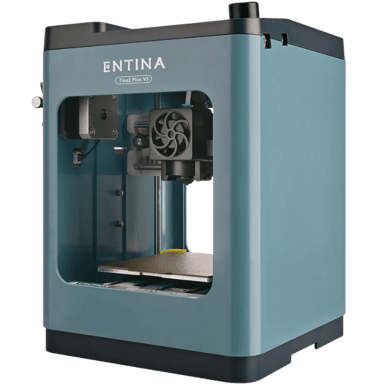
When it comes to home or small office 3D printing, the Entina Tina2 Plus V3 stakes a solid claim as an accessible yet technically capable option. Released in 2023, this FDM/FFF type printer has been engineered primarily for consumers and beginners looking to dive into prototyping, miniatures, or engineering models without fuss. Its prebuilt assembly and an upgrade path further underscore its ease of use and future-proofing. Judging by its detailed specs, it leans on reliable engineering and thoughtful design that promise both decent build volume and respectable precision, making it intriguing to a broad range of users.
Detailed Specs & Features
On paper, the Tina2 Plus V3 boasts a compact footprint with a width of 11.4 inches, depth of 8.6 inches, and height of 8.6 inches, weighing just under 10 pounds. This makes it ideal for desktops or small workspaces. Its build volume of 61.02 cubic inches (3.9 x 4.7 x 3.9 inches in width, depth, and height, respectively) offers enough room for printing intricate miniatures and functional prototypes. The printer's layer resolution ranges between 0.1 and 0.4 mm, allowing for fairly detailed prints that can satisfy beginner and intermediate users aiming for fine results.
From a system perspective, it operates on an external power supply that supports a wide voltage input (100-240 Volts), ensuring compatibility worldwide. The printer consumes 60 watts during operation and only 10 watts idling, which is efficient for its class. The nozzle temperature caps at a high 473°C, enabling printing of a variety of filaments such as PLA, TPU, and ABS (all supported out of the box).
User Experience & Performance
Design & Build
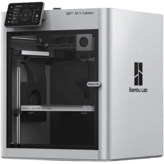
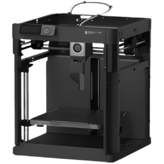
The Entina Tina2 Plus V3's compact and lightweight frame type, classified as cantilever style, supports an open enclosure design. This creates easier access to the build area and simplifies filament changing or maintenance tasks. The use of a spring sheet for the build plate with a textured surface improves print adhesion and removal, which beginners will appreciate for its convenience. A removable build plate further adds to the ease of handling printed models. Inside, bright white chamber lighting enhances visibility during prints, a small but thoughtful detail for monitoring progress without the need for external light.
Performance
In daily use, the Tina2 Plus V3 offers an official maximum print speed of 250 mm/s. However, its measured effective print speed is approximately 60 mm/s, which aligns more realistically with actual user scenarios, balancing quality and speed. Printing a standard Benchy model takes around 90 minutes, and the printer maintains a commendable print success rate of 90%. The Bridging performance at 20 degrees and the overhang performance at 55 degrees highlight decent capabilities for printing complex geometries without excessive stringing or sagging. Auto first-layer calibration and PEI print adhesion type further mitigate common beginner mistakes and enhance the initial print layers' success. Moreover, it can continuously print for up to 72 hours, which suggests good thermal and mechanical stability.
Camera & Display
While it lacks a built-in camera, the touchscreen display is a standout feature for this price segment with responsive controls and intuitive UI. The operational noise level at 48 decibels is moderate; it'll be noticeable but not intrusive in a quiet workspace. Idle noise dips to 38 decibels, so it remains relatively quiet when not actively printing.
Extra Features
The printer supports print recovery after power loss, a vital feature to avoid failed prints during unexpected outages. Filament dry box functionality is built in, addressing filament moisture issues that can degrade print quality; an excellent inclusion that enhances filament reliability. Hotend replacement is straightforward, given the replaceable nozzle and Bowden extruder drive type, which also facilitates experimentation with different nozzle sizes and materials. Firmware updates can be pushed remotely over Wi-Fi, keeping the device up-to-date without user hassle.
Pros & Cons
Pros
- Compact, lightweight design ideal for beginner spaces.
- Auto bed leveling and filament runout sensor improve print reliability.
- Wide filament compatibility and multiple nozzle size options.
- Lower power consumption and recognized safety certifications (CE, FCC, RoHS).
Cons
- No built-in camera or advanced remote monitoring options.
- Limited to single-extruder setups; no multi-material printing support.
Price & Value for Money
At a price point of $259, the Entina Tina2 Plus V3 delivers considerable value given its features and specs. The 1-year warranty provides a basic safety net for new users, which is reasonable for an entry-level device. Its energy-efficient electrical design, combined with a capable hotend temperature range and multiple filament compatibilities, gives it a versatility advantage in this pricing tier. While it doesn't include some high-end bells and whistles like dual extrusion or resin printing, its solid performance metrics, such as a 90% print success rate and auto-bed leveling, make it an excellent budget-friendly gateway into FDM 3D printing. This printer is best suited for hobbyists, educators, or designers who want a reliable machine that requires minimal setup and maintenance yet supports upgrades such as adding an enclosure or a camera down the line. Professionals needing multi-material or very large build volumes might want to explore pricier alternatives.
Quick Take
In short, the Entina Tina2 Plus V3 blends usability with respectable engineering specs suitable for beginners stepping into desktop 3D printing. Its combination of power efficiency, smart features like filament dry box, and auto-bed leveling distinguishes it clearly in the sub-$300 category. If we look at the numbers alone, it's a solid value proposition without major compromises for most entry-level projects.
Closing Recommendation
Based on the verified specifications, the Entina Tina2 Plus V3 may be ideal for beginners and casual makers who value hassle-free assembly, stable performance, and the ability to upgrade as their skills develop. Its clear focus on standard filaments and safety certifications ensures users can confidently experiment with a variety of materials within its limits. While it lacks advanced multi-material or resin capabilities, it helps users achieve quality prints consistently with minimal intervention, making it a dependable tool for learning and prototyping.
Verdict
Rating: Based on the specifications and overall feature set, we believe Entina Tina2 Plus V3 deserves 4.3 out of 5.
- Winner Feature => Efficient auto bed leveling and filament management that significantly improve beginner experience and print reliability.
- Needs Improvement => Inclusion of a built-in camera and multi-material extrusion options to enhance monitoring and print versatility.
Reviews 0
The good, the bad, and the brutally honest.Average Rating


More 3D Printers 453
Unlock more awesome finds.